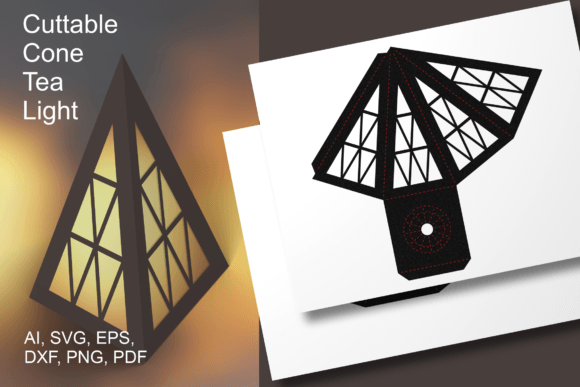
Triangles Patterned Xmas Cone Lantern
A Designer’s First Glance: Clean, Festive, and Surprisingly Versatile
When I opened the Triangles Patterned Xmas Cone Lantern file, my first thought wasn’t “Oh, another holiday motif.” It was, “This has rhythm.” The geometry is precise but not cold—those interlocking triangles create movement, like light catching facets of a frosted glass ornament. It reads as modern yet timeless, minimalist but full of quiet warmth. As a designer who regularly sources embroidery assets for boutique clients and small craft businesses, I immediately saw its potential beyond paper-cut lanterns: this isn’t just a decorative template—it’s a scalable design language.
How It Translates to Real Embroidery Projects
Last week, I tested the Triangles Patterned Xmas Cone Lantern on a custom embroidered tote bag for a local gift shop owner. We used it as a subtle corner accent—not centered, not oversized—just 3.5 inches tall, placed low on the right side seam. The result? Customers paused. Not because it shouted, but because it *invited*. That same rhythm works beautifully on sweatshirt cuffs, baby onesie hems, or folded tea towel edges. Its clean lines hold up in satin stitch for crisp definition, and its open negative space makes fill stitch breathable—no puckering on lightweight cotton or linen blends.
I also stitched it onto a set of nursery pillow covers using soft pastel thread on ivory twill. Here, the design’s simplicity shone: no visual clutter, no competing motifs. Parents responded strongly to how “calm” and “intentional” it felt—exactly what handmade baby items need. For Etsy sellers, that emotional resonance matters. A well-placed Triangles Patterned Xmas Cone Lantern doesn’t just decorate; it signals care, consistency, and thoughtful curation.
Where It Shines—and Where to Pause
This design excels in medium-to-large hoop sizes (4x4 inches and up) on stable, medium-weight fabrics: canvas totes, denim jackets, structured aprons, and woven kitchen towels. It performs reliably as a machine embroidery design on cotton, poly-cotton blends, and even medium-stretch knits—if paired with light cutaway stabilizer and reduced stitch density in the triangle points.
But be mindful: the sharp corners and narrow connecting lines don’t forgive thin fabric or aggressive hooping. On delicate rayon or ultra-thin voile, those outer tips can distort or fray during stitching. On dark fabric, contrast becomes critical—test thread colors early. I found matte ecru or charcoal gray worked better than stark white for depth and sophistication. And avoid placing it across high-curve surfaces like cap fronts unless you’re willing to split and reposition the design manually.
Smart Pairings for Craft Business Owners
- Tote bag design: Use as a subtle brand signature—small, aligned with a logo or monogram.
- Sweatshirt embroidery: Scale to 4–5 inches across the left chest for seasonal collections.
- Embroidered patch: Convert to an applique design with clean satin-stitched borders—ideal for scout badges or boutique keychains.
- Holiday embroidery: Layer with simple running-stitch stars or tiny snowflakes for variety without visual noise.
- Printable mockup: Works exceptionally well in digital previews—clean lines render crisply at any resolution.
What It Adds to Your Finished Product—Beyond Stitching
The Triangles Patterned Xmas Cone Lantern elevates perceived value without demanding premium pricing. Its balance of structure and softness tells customers, “This was chosen—not slapped on.” For small shop owners, that builds trust. For Etsy sellers, it strengthens brand consistency across product categories: same motif on a tea towel, a baby bib, and a holiday card sleeve creates cohesion that shoppers remember.
It also supports giftability. Unlike overly literal Christmas icons (reindeer, candy canes), this design feels personal and refined—perfect for wedding gifts, teacher presents, or curated subscription boxes. And because it avoids cliché, it stays relevant beyond December. I’ve already repurposed it for spring table linens by swapping red/green threads for sage and cream.
Practical Designer Notes Before You Stitch
- Always test on scrap fabric first—especially if using textured weaves or stretchy knits.
- Review stitch density. If your machine flags dense areas, reduce fill density by 10–15% in the central triangle clusters.
- Confirm hoop size compatibility. While scalable, the original layout assumes a minimum 3.75-inch vertical clearance for clean point definition.
- Inspect small details at 200% zoom in your embroidery software—look for stray nodes or overlapping paths that could cause jump stitches.
- Test black-and-white mockups before finalizing thread palettes. This design relies on shape, not color, so contrast must carry weight.
- Use proper stabilizer: light cutaway for wovens, tear-away for stable knits, and bumpy mesh for towels.
- Verify licensing before selling finished items or bundling the digital embroidery file—this falls under Graphics, so commercial use rights must be confirmed directly with the source.
Final Thought: A Quiet Workhorse for Intentional Makers
The Triangles Patterned Xmas Cone Lantern won’t dominate your catalog—but it’ll anchor it. It’s the kind of embroidery file that earns repeat use across seasons, products, and clients. For craft business owners juggling Etsy listings, craft fairs, and custom orders, it’s a rare find: a design that’s both distinctive and dependable. It doesn’t ask for attention. It earns it—stitch by thoughtful stitch.