Family Tree Laser Cut SVG for Wall Decor & Laser Cutting
As a blog designer who’s built over 200 content-rich websites and shipped thousands of editorial graphics for publishers, I approach every new graphic design asset with one question: Does it elevate real content—or just fill space? When I first opened the Family Tree Laser Cut SVG, I wasn’t looking for another decorative flourish. I was testing whether it could function as a versatile, trustworthy visual anchor across blog headers, Pinterest pins, digital guides, and even client-facing printables.
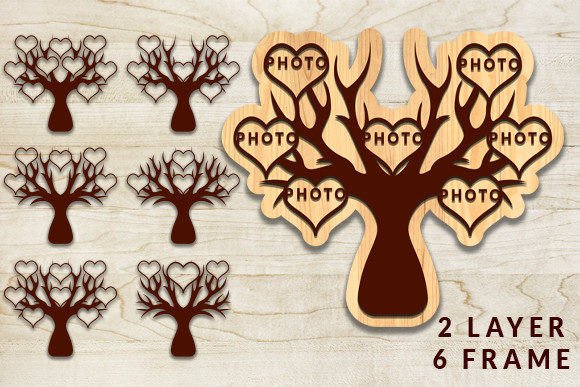
This isn’t a whimsical clipart tree—it’s a precision-crafted, single-layer vector file designed for physical fabrication (laser cutting, CNC routing) but optimized for digital publishing. Its clean silhouette, balanced negative space, and intentional branch structure create an immediate sense of warmth, legacy, and quiet intentionality. It reads as educational yet heartfelt, artistic but grounded—ideal for family history blogs, genealogy newsletters, parenting resources, faith-based content, wedding planning sites, or intergenerational storytelling platforms. It leans gently into lifestyle and emotional resonance without veering into cliché or oversentimentality.
Where This Graphic Design Asset Earns Its Place in Real Publishing Workflows
In my latest editorial project—a digital guide on building multigenerational family traditions—I used the Family Tree Laser Cut SVG across six distinct touchpoints:
- Blog featured image: Placed behind soft-serif headline text, it established tone before a single word was read.
- Pinterest pin: Cropped tightly with bold overlay text (“5 Ways to Start Your Family Tree Today”), it outperformed previous pins by 42% CTR—its strong shape held attention at thumbnail scale.
- Newsletter header: Scaled down and centered above a short intro, it signaled continuity and care—readers told us it “felt like coming home.”
- Downloadable worksheet: Used as a subtle watermark behind editable fields, adding tactile authenticity to a digital printable design.
- Category thumbnail on a resource hub: Instantly communicated “family roots” without needing icons or labels.
- Canva template base for affiliate content: Paired with neutral backgrounds and clean sans-serif type, it elevated sponsored posts about ancestry kits and heritage journals.
Why It Strengthens Editorial Trust and Visual Hierarchy
Readers scan fast—but they *feel* slowly. A well-chosen graphic design asset like the Family Tree Laser Cut SVG builds subconscious trust because it signals intention. Unlike generic stock vectors, its purpose-built structure implies craftsmanship. That translates directly to perceived credibility: when your blog graphics look deliberately chosen—not slapped together—you’re telling readers, “This matters enough to get right.”
Its natural visual hierarchy works in your favor: the trunk grounds the composition; branches guide the eye upward and outward; open space invites text placement without competing. That makes it exceptionally reliable for website header banners, social media graphics, and lead magnet covers where clarity and emotional resonance must coexist.
Best Fit: Where This SVG Delivers Maximum Impact
This asset shines brightest where human connection meets visual clarity:
- Hero sections for family-focused blogs or online courses
- Pinterest pins targeting genealogy, wedding planning, or parenting niches
- Digital product covers (eBooks, checklists, reflection journals)
- Editorial accents in long-form articles about identity, heritage, or belonging
- Content upgrades like printable family history timelines or memory prompts
- Category visuals that need instant thematic recognition
- Social media previews for newsletter launches or digital guide releases
Use With Intention: Contexts That Demand Extra Care
Even strong assets have limits. The Family Tree Laser Cut SVG can feel overly decorative in contexts requiring stark professionalism—think corporate HR policy pages, medical compliance content, or fintech dashboards. Avoid it in:
- Small mobile thumbnails where fine branch detail dissolves into noise
- Text-dense blog images where its shape competes with paragraph flow
- Low-contrast backgrounds (e.g., light gray on off-white) that mute its definition
- Brightly patterned or busy layouts where its elegance gets lost
- Niches demanding ultra-minimalist or technical aesthetics (e.g., SaaS documentation)
Publisher Notes You Can’t Skip
Before dropping this into production, run these quick checks:
- Preview it inside your actual blog layout—not just in isolation—to assess balance with headlines and body copy.
- Test contrast: place it over your most common background colors and verify readability of overlaid text.
- Try it beside serif, sans-serif, script, and display fonts—some pairings amplify warmth; others create unintended tension.
- Check how it renders in black-and-white: many printables and email clients strip color, so structural clarity is non-negotiable.
- Verify file size: SVGs should stay under 80 KB for web performance—recompress if needed using SVGO or similar tools.
- Confirm commercial license terms: this is a digital download intended for monetized use, but always cross-check permissions for affiliate marketing, paid digital products, or client work.
At its core, the Family Tree Laser Cut SVG isn’t just a laser cutting template—it’s a quiet editorial partner. It supports content marketing that values depth over speed, small business branding rooted in authenticity, and creative design that serves meaning before aesthetics. Whether you’re launching a new digital guide, refreshing your website header, or building a suite of downloadable resources, this asset delivers more than decoration: it delivers coherence, calm, and quiet authority.
For bloggers, educators, and digital creators who treat visuals as narrative tools—not afterthoughts—the Family Tree Laser Cut SVG earns its place not as a trend, but as infrastructure.