Dottedline Shapes: Decorative Elements & Graphics
First Impressions: Friendly, Handmade, and Quietly Confident
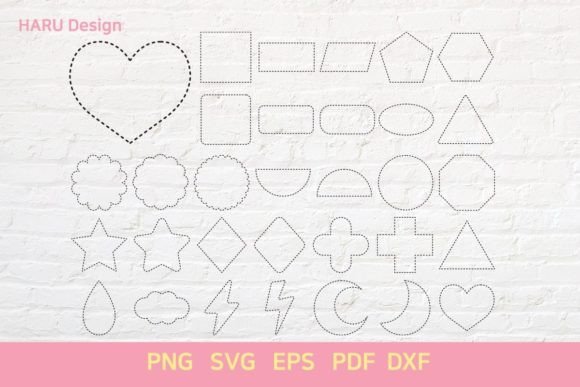
When I opened Dottedline Shapes for a recent project with a local lavender honey brand, my first thought wasn’t “pretty clipart”—it was “this feels like a quiet signature.” The collection leans into soft geometry: gentle dots tracing circles, scalloped edges, subtle arcs, and open-line frames—all rendered with consistent stroke weight and breathing space. It doesn’t shout. It invites. That makes it ideal for small business branding where authenticity and warmth matter more than flash—think artisanal food labels, handmade soap packaging, or boutique stationery. It reads as organic but intentional, handmade but precise. Not overly rustic, not sterile modern—it lands in that sweet spot where customers feel cared for, not sold to.
Where It Strengthens Real Local Business Branding
I used Dottedline Shapes across three core touchpoints for the honey brand: product labels, thank-you cards tucked inside orders, and Instagram story highlights. In each case, it elevated perception without overwhelming the message. On 2 oz honey jars, a single dotted circle framed the batch number—adding visual hierarchy while reinforcing craft. On matte kraft thank-you cards, two interlocking shapes became a subtle watermark behind handwritten notes, deepening emotional connection. And on social media graphics, a rotated dotted frame held seasonal copy (“Summer Harvest • Small-Batch • Local Bees”)—clean enough for quick scrolling, distinctive enough to build recognition over time. That’s the real value: consistency without repetition, decoration with purpose.
Practical Uses Across Your Brand Ecosystem
- Product labels: Frame ingredients, origin stories, or certifications—especially effective on natural skincare, coffee beans, or children’s products where softness signals safety and care.
- Packaging accents: Use as borders on box flaps, die-cut windows, or hang tags—adds tactile sophistication without extra printing costs.
- Social media graphics: Layer over flat-lay photos or use as animated SVG elements in Canva templates for cohesive campaign visuals.
- Printable inserts: Perfect for recipe cards, care instructions, or seasonal greeting slips—works beautifully at 100% scale on letter-sized paper.
- Hero graphics & banners: Scale confidently for website headers or in-store posters—SVG and EPS files retain crispness even at 5ft wide.
Where It Builds Trust—and Where to Pause
Small business customers scan fast. A well-placed Dottedline Shape creates immediate visual rhythm—guiding the eye toward your logo, flavor name, or call-to-action. That clarity builds trust: it says you’ve considered how people actually experience your brand. Shelf appeal improves too—on crowded farmers’ market tables or boutique shelves, those subtle dotted frames make your jar or candle stand out *without* competing with competitors’ bolder fonts or busier illustrations.
But be selective. Avoid using it directly beside dense ingredient lists or legal disclaimers—it’s decorative, not functional typography. Steer clear on ultra-minimalist luxury brands (think monochrome ceramic tea sets) where every element must carry conceptual weight. And never drop it onto low-contrast backgrounds—test all PNGs for transparency bleed, especially over textured kraft paper or pastel packaging.
Brand Designer Notes You’ll Actually Use
- Test on real packaging mockups—not just screen previews. Print a 2” label with your chosen shape at 72dpi and 300dpi; see how dot spacing holds up.
- Check black-and-white usage: Does the shape retain character when printed in one color? Some dotted lines vanish at small sizes—verify at 0.5pt stroke weight.
- Preview alongside your fonts: Try each Dottedline Shape next to serif (e.g., Playfair), sans (e.g., Inter), script (e.g., Pacifico), and display (e.g., Bungee) typefaces. Note which pairings feel harmonious—not just “matching.”
- Confirm commercial licensing before applying to physical product sales or client work. This isn’t editorial design—it’s commercial design supporting real revenue.
- Inspect vector editability: Open the SVG in Illustrator—can you adjust dot density or spacing without breaking the path? Flexibility matters for customizing per product line.
- Compare against competitor packaging: Does it differentiate—or blend in? Decoration should reinforce distinction, not dilute it.
Why This Works for Handmade & Local Business Reality
Unlike generic marketplace clipart, Dottedline Shapes avoids cliché. There are no cartoon bees, no overused watercolor splatters, no forced “vintage” textures. Instead, you get 31 thoughtfully composed forms—each with its own personality, all sharing a unified language. That cohesion is gold for small business branding: it lets you build a recognizable visual vocabulary across stickers, menus, web banners, and product mockups without hiring an illustrator for every asset. For a florist launching spring bouquets, one shape becomes a border on digital flyers; another rotates into a logo lockup; a third scales down for delicate sticker seals. All from the same graphic design asset—no style drift, no budget creep.
It’s also unusually versatile across formats: SVG for responsive web design, high-res PNG for social media graphics, DXF for laser-cut hang tags, PDF for print-ready layouts. That cross-platform readiness saves hours—especially for solo creatives juggling packaging design, marketing visuals, and client revisions.
In the end, Dottedline Shapes isn’t about adding “more design.” It’s about adding better intention. When your honey label, candle box, or boutique tote feels quietly confident—not loud, not trendy, but unmistakably *yours*—that’s when decorative elements earn their place in professional branding. And that’s exactly what this collection delivers.